
— Guides
SEO for ChatGPT and Gemini: What GEO is and How to Apply it to eCommerce (2026)
UK, USA, Global
SEO for ChatGPT and Gemini: The Practical Guide to GEO for eCommerce
TL;DR — GEO (Generative Engine Optimization) is the set of actions that increase the probability that an AI assistant — ChatGPT, Gemini, Claude, Perplexity, Google AI Mode — will cite or recommend your brand and products. It doesn't replace SEO: it extends it. Four levers matter: being mentioned on reliable external sources, consistent product and company data everywhere, content that directly answers questions, and a site readable by AI crawlers.
Free technical audit · Selling on ChatGPT · Agentic commerce
SEO vs. GEO: What Really Changes
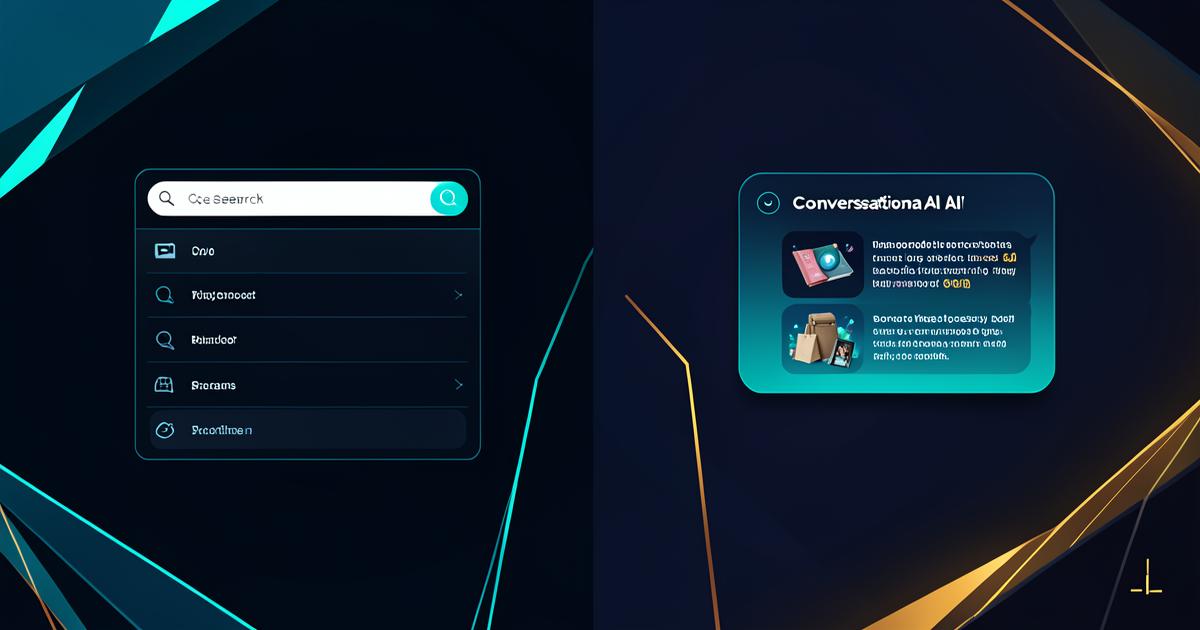
Key takeaway 1. The key difference: a search engine shows ten results; an assistant names two or three.
| Classic SEO | GEO | |
|---|---|---|
| Objective | Ranking in results | Being cited in the answer |
| Unit of value | The page | The brand, the entity, the product |
| Primary signal | Links and relevance | Consistent mentions across multiple sources |
| Winning format | Comprehensive page | Short, verifiable, summarizable answer |
| Measurement | Position, clicks | Citation share, AI referral traffic |
The key difference: a search engine shows ten results; an assistant names two or three. If you're not among them, for that user, you don't exist.
How AI Decides Who to Recommend
Assistants combine two sources:
- Learned knowledge during training: what the web says about your brand. This includes directories, reviews, industry articles, forums, Wikipedia/Wikidata.
- Real-time search (ChatGPT search, Gemini, Perplexity, AI Mode): the assistant queries the web and summarizes the best-structured pages.
The practical rule follows: AIs repeat what other sites say about you, more than what you say about yourself. That's why GEO is half on-site work and half external presence.
The 4 GEO Levers for eCommerce
1. Consistent External Mentions
- Complete profiles on industry directories and marketplaces, with identical names, addresses, and descriptions.
- Real reviews on verifiable platforms (Google, Trustpilot, industry-specific platforms).
- Citations in articles, comparisons, and "best X for Y" lists written by third parties.
- Authentic discussions in communities (Reddit, industry forums): no spam, communities recognize and penalize it.
2. Structured Data and Consistent Feeds
OrganizationwithsameAslinking to official profiles.Product,Offer,AggregateRating,MerchantReturnPolicyaligned with the Merchant Center feed.- Identical prices and availability across the page, feed, and markup: inconsistencies cause the offer to be discarded.
3. "Citable" Content
- Start every page with a direct 2–3 sentence answer to the main question.
- Use comparison tables, lists with criteria, and real customer FAQs.
- Verifiable data with source and date. AIs avoid repeating unproven promotional claims.
- Pages dedicated to purchase questions: "which X to choose for Y", "X vs Z", "how much does X cost".
4. Technical Accessibility for AI Crawlers
- Do not block GPTBot, OAI-SearchBot, ClaudeBot, PerplexityBot, or Google-Extended in
robots.txtif you want to be cited. - Main content in the initial HTML, not loaded solely via JavaScript.
- Fast pages: crawlers have limited budgets. See speeding up an eCommerce.
- An
llms.txtfile summarizing who you are and which pages to read.
Google AI Mode and AI Overviews: Practical Steps
Key takeaway 2. Google's AI responses reduce clicks on simple informational searches; commercial and comparison searches continue to drive qualified visits.
Google's AI responses reduce clicks on simple informational searches; commercial and comparison searches continue to drive qualified visits. Priorities:
- Dominate comparison and choice queries, where the user still wants to go deeper.
- Keep the Merchant Center feed updated: it's the foundation for shopping results even within AI Mode.
- Measure clicks and impressions by query type in Search Console, not just the total.
How to Measure GEO
Key takeaway 3. 1. Citation Monitoring: a fixed list of 10–20 purchase questions from your customers, asked weekly to the main assistants.
- Citation Monitoring: a fixed list of 10–20 purchase questions from your customers, asked weekly to the main assistants. Record if you appear, in what position, and which competitors are named.
- AI Referral Traffic in GA4: create a channel grouping chatgpt.com, gemini.google.com, perplexity.ai, copilot.microsoft.com, claude.ai.
- Conversions from that channel: AI traffic is low but often very informed. Evaluate it on leads, not just visits. Context: how much traffic AIs drive.
30-Day GEO Checklist
Key takeaway 4. [ ] List 20 real purchase questions from your customers and check who is cited today.
- List 20 real purchase questions from your customers and check who is cited today.
- Unblock AI crawlers in
robots.txt. - Align
Organization+sameAsand company data across all profiles. - Complete feed and
Productschema with returns, shipping, and GTIN. - Rewrite the opening of the 10 most visited pages with a direct answer.
- Create 3 comparison pages with verifiable criteria.
- Ask for real reviews from 5 satisfied customers.
- Publish
llms.txtand set up the "AI referral" channel in GA4.
Want to know today if ChatGPT and Gemini recommend your eCommerce or your competitors? Request a free audit: we include an AI citation check on your customers' questions.
FAQ
What is GEO?
GEO stands for Generative Engine Optimization: the optimization of your website and online presence to be cited in the responses of AI assistants like ChatGPT, Gemini, Claude, Perplexity, and Google AI Mode.
Does GEO replace SEO?
No. Assistants with web search read pages that rank well: good SEO remains the foundation. GEO adds work on external mentions, data consistency, and easily summarizable content.
How do I get my eCommerce to appear on ChatGPT?
Make the site accessible to OpenAI crawlers, publish complete and consistent product data, answer purchase questions directly, and get mentioned on reliable external sources. There is no way to pay for inclusion in organic responses.
How long does it take to see results?
Website changes are read by assistants with web search in a few weeks. External mentions enter the models' knowledge more slowly: generally, you should think in terms of a few months.
Does blocking GPTBot protect my content?
Yes, but it reduces the chances of being cited. For an eCommerce that wants to be recommended, it is generally better to allow access to AI search crawlers.
Do reviews matter for AI?
Yes: real reviews on verifiable platforms are among the signals most frequently used when a user asks for "the best" or "the most reliable". Fake reviews violate platform rules and consumer rights.
Read moreagentic commerce and AI shopping agents · Magento agency in Europe · Magento vs Shopify Plus · google universal cart · social commerce 2026
— Related guides
Guide · Global, USA, UK, EMEA
Google Universal Cart and UCP: The Complete Guide to Agentic Commerce (2026)
Google Universal Cart and UCP protocol: Prepare your eCommerce (Magento, Shopify) for native checkout on Gemini, Search, and YouTube. 2026 Technical Guide.
Guide · United Kingdom, Ireland, EMEA
Best eCommerce Platform in 2026: Magento, Shopify or Something Else
Magento, Shopify Plus, WooCommerce or headless: how to choose the right eCommerce platform in 2026 based on catalogue size, B2B, budget and integrations.
Guide · United Kingdom, Ireland, EMEA
Ecommerce Security: Real Risks and How to Protect Customer Data
Ecommerce security risks in 2026: Magecart, fraud, credential stuffing, GDPR and PCI DSS. Concrete countermeasures and a compliance checklist.
Guide · United Kingdom, Ireland, London, Dublin
Social Commerce 2026: The Ultimate Guide for eCommerce Brands
Master TikTok Shop, Instagram Shopping, and Meta AI agents in 2026. Learn how to integrate Magento and Shopify catalogs for seamless social selling.
— From the blog


— Armah
Want to discuss your project?
Free 30-minute consultation with the Armah team.